A lush green lawn can transform the appearance of any home, apartment complex, office campus, or public garden. However, maintaining a healthy lawn in Indian conditions is not always easy. Extreme summer temperatures, heavy monsoon rains, compacted soil, poor watering practices, and excessive chemical use can leave grass looking dry, patchy, or unhealthy. Fortunately, restoring lawn health does not always require harsh chemicals. Natural lawn care methods can improve grass growth while supporting long-term soil health.
Understanding Why Lawns Lose Their Health
Before starting any restoration process, it is important to identify the cause of the problem. In many Indian cities such as Bengaluru, Hyderabad, Pune, and Gurugram, lawns often suffer from heat stress during summer months when temperatures can exceed 35°C. In coastal regions, excessive moisture and poor drainage may lead to fungal issues, while compacted soil is a common problem in residential gardens and public parks with heavy foot traffic.
Signs of an unhealthy lawn include yellowing grass, bare patches, slow growth, weed invasion, and hard soil that struggles to absorb water.
Improve Soil Health First
Healthy grass begins with healthy soil. One of the best natural ways to restore a lawn is by enriching the soil with organic matter. Adding compost or well-decomposed organic manure improves soil structure, enhances moisture retention, and encourages beneficial microorganisms.
Organic matter also helps sandy soils hold nutrients while improving drainage in clay-heavy soils. Over time, this creates an ideal environment for strong root development.
Aerate Compacted Soil
Soil compaction prevents roots from accessing oxygen, water, and nutrients. Lawn aeration involves creating small holes in the soil to improve airflow and water penetration.
For small home gardens, simple garden forks can be used to loosen compacted areas. Aeration is particularly beneficial after the monsoon season when soil often becomes dense and compacted.
Use Natural Plant Boosters
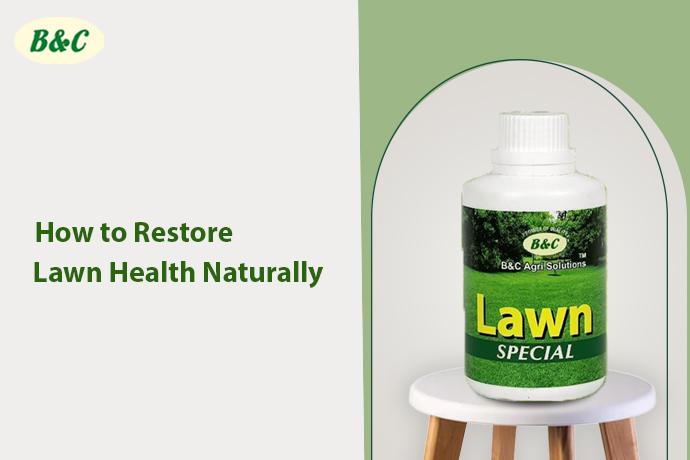
Natural biostimulants such as liquid seaweed, humic substances, and microbial soil enhancers can support lawn recovery. These products help strengthen root systems, improve nutrient uptake, and increase the lawn’s ability to withstand environmental stress.
Many professional landscapers in India are now incorporating organic lawn care products to reduce dependence on synthetic fertilisers while maintaining healthy green spaces.
Follow Proper Watering Practices
Overwatering and underwatering are both common causes of lawn damage. Deep watering once or twice a week is generally more effective than frequent shallow watering. Early morning irrigation helps minimise water loss through evaporation and allows grass to absorb moisture efficiently.
During hot Indian summers, lawns may require additional attention, but excessive watering should be avoided as it can encourage disease development.
Control Weeds Naturally
Healthy grass naturally competes with weeds. Regular mowing, proper fertilisation, and dense turf growth help suppress unwanted plants. Hand removal remains one of the safest and most environmentally friendly weed management methods for home lawns.
Maintaining the correct mowing height also allows grass to shade the soil surface, reducing weed germination.
Feed the Lawn with Organic Nutrients
Instead of relying solely on chemical fertilisers, use organic inputs such as compost, vermicompost, or natural soil conditioners. These release nutrients gradually and support long-term soil fertility without causing nutrient burn.
Organic feeding also promotes beneficial microbial activity, which plays an important role in nutrient cycling and root health.
Restoring lawn health naturally requires patience and a focus on building strong soil foundations. By improving soil quality, aerating compacted areas, using natural biostimulants, following proper watering practices, and applying organic nutrients, homeowners can revive damaged lawns sustainably. In India’s diverse climate conditions, natural lawn care not only helps create greener landscapes but also supports healthier ecosystems for the long term.

 vitachatorganic